Fresh acrylics look polished the moment you leave the salon, but the real test starts a few days later – when you’re opening packages, washing dishes, typing, and moving through a busy week. If you’ve ever wondered how to care for acrylic nails without dulling the shine or shortening their lifespan, the answer is usually less about complicated products and more about consistent habits.
Acrylic nails are durable, but they are not indestructible. They hold up beautifully when they are treated with a little intention. Good aftercare protects the appearance of your nails, helps prevent lifting, and supports the health of your natural nails underneath.
How to Care for Acrylic Nails Day to Day
The best daily care is simple. Keep your nails clean, dry, and protected from unnecessary stress. Acrylics can handle normal day-to-day life, but they tend to break down faster when they’re used as tools. Prying open a can, scraping off a label, or using the tip of your nail to pick at something may seem harmless in the moment, but that repeated pressure can lead to cracks, lifting, or even painful breaks.
Moisture matters too, just in a different way than many clients expect. Brief handwashing is fine and essential for hygiene, but prolonged soaking is harder on acrylics. Long baths, frequent dishwashing without gloves, and extended time in hot water can weaken the bond between the acrylic and your natural nail. If your hands are often in water, wearing gloves makes a noticeable difference.
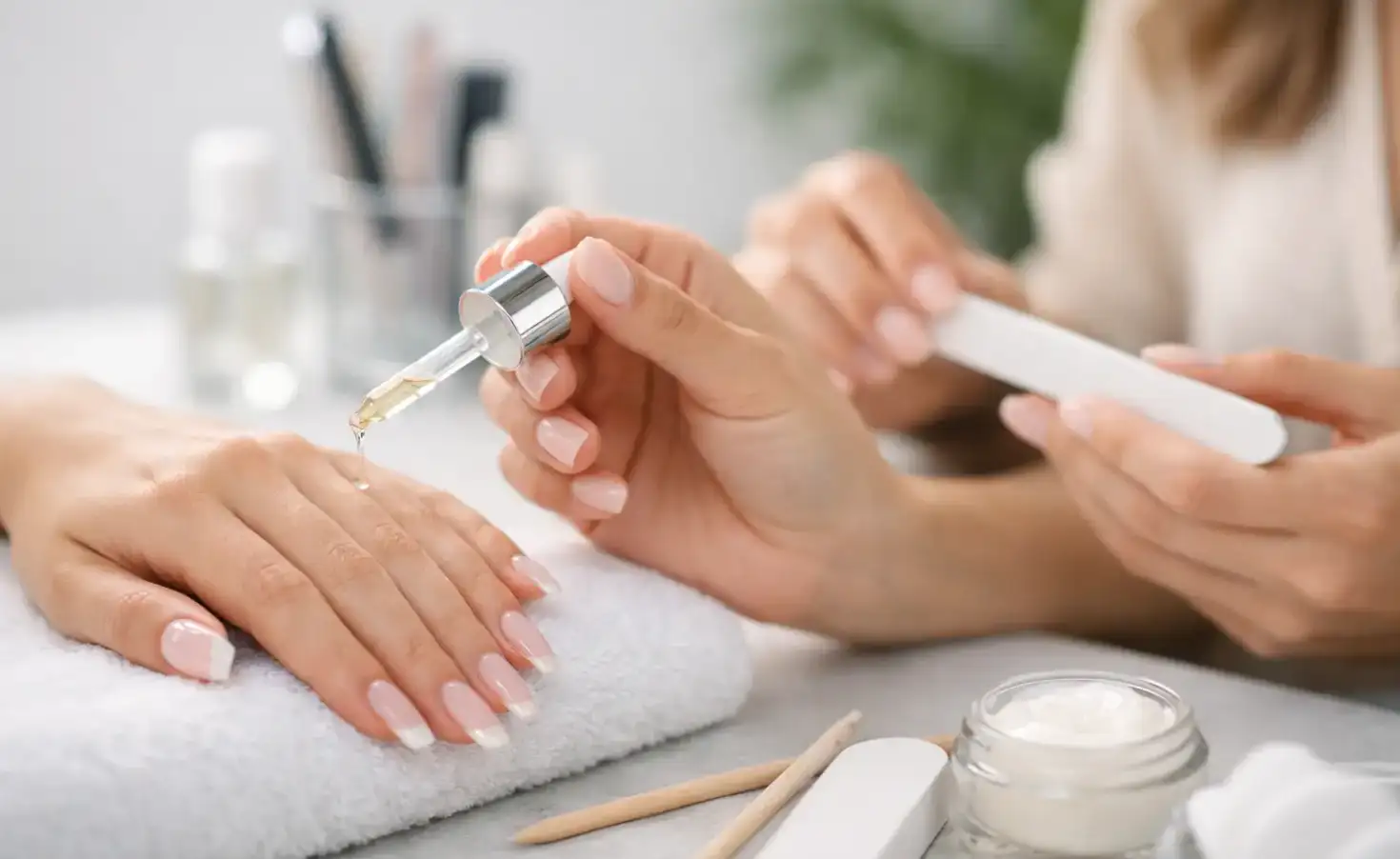
Cuticle oil is one of the easiest ways to keep acrylics looking better between appointments. Applying a small amount once or twice a day helps maintain flexibility around the nail area and keeps the skin from looking dry or rough. Well-moisturized cuticles also give the whole manicure a cleaner, more refined appearance.
Protect the Finish Without Overthinking It
Acrylic nails usually need less fuss than people assume, but they do need a little protection. Household cleaners, acetone exposure, and rough contact can wear down topcoat and leave the surface looking tired. If you clean often, especially with strong products, gloves are worth keeping nearby.
Hand cream helps as well, especially after washing your hands repeatedly or spending time outdoors. Just avoid slathering thick product under the free edge of the nail. You want hydration around the hands and cuticles, not buildup trapped underneath.
If you wear polish over acrylics, remember that acetone-based removers can be drying and can dull the finish if used too often. A gentler polish remover is usually the better choice for routine color changes unless your nail technician recommends otherwise.
Refill Timing Matters More Than Most People Think
One of the most common reasons acrylic nails stop looking and feeling their best is waiting too long for a fill. As your natural nails grow, the balance of the acrylic changes. What started as a strong, properly structured set can become more vulnerable to pressure when too much growth is left unsupported.
For most clients, fills every two to three weeks are ideal. Some can stretch closer to three weeks, while others do better on a shorter schedule depending on nail growth, length, lifestyle, and how hard they are on their hands. If you work with your hands, type constantly, or prefer longer acrylics, regular maintenance becomes even more important.
Waiting too long is not just a cosmetic issue. Growth gaps can allow lifting, and lifting can trap moisture and debris. That is one reason professional maintenance in a clean salon setting matters. It keeps the set looking polished while also protecting nail hygiene.
What Not to Do With Acrylic Nails
A lot of acrylic damage happens because people try to fix small issues at home. If a nail lifts, cracks, or starts catching on fabric, it can be tempting to glue it down or file aggressively. That usually creates a bigger problem.
Picking at lifting acrylic is one of the fastest ways to damage the natural nail underneath. The same goes for peeling, biting, or trying to remove acrylics at home by force. Acrylic should never be pulled off. Even if only part of the enhancement seems loose, removing it incorrectly can leave the natural nail thin, sore, and more prone to breakage.
Over-filing is another common mistake. A light smoothing of a rough edge may be fine, but reshaping too much at home can throw off the structure of the nail. If something feels off, a professional repair is safer than trying to improvise.
How to Keep Acrylic Nails Clean
Clean nails are part of beautiful nails. Acrylics should be kept free of buildup, especially underneath the free edge. A soft nail brush, gentle soap, and warm water are usually all you need. The goal is to clean without forcing tools under the nail or creating pressure that can loosen the enhancement.
If you cook often, garden, use cosmetics, or work in environments where debris collects under the nails, pay a little extra attention to cleaning. Long nails naturally need more upkeep than short ones. That does not mean long acrylics are a bad choice – only that maintenance should match the style you choose.
It is also wise to pay attention to any unusual odor, discoloration, or separation. Those signs do not always mean something serious, but they do mean it is time to have your nails checked professionally rather than covered up with polish.
If You Want Acrylics to Last Longer, Length and Shape Matter
Not every acrylic style wears the same way. A shorter, more practical length tends to hold up better for clients with active routines. A dramatic shape or extra length can look beautiful, but it often requires more caution and more regular maintenance.
That does not mean you need to choose only the most conservative option. It simply means the best set is the one that fits your lifestyle. If you are constantly on the go, caring for children, working on a keyboard all day, or using your hands for daily tasks, a balanced shape and moderate length often give you the best combination of beauty and durability.
A good nail technician can help you choose what looks elegant and still works in real life. That conversation is part of quality service, especially in a salon that values consistency and long-term care over quick fixes.
When to Repair and When to Remove
Sometimes a repair is enough. A small crack, a chipped corner, or a single broken nail can often be corrected without replacing the full set. In other cases, removal is the better choice, especially if there is widespread lifting, repeated breakage, or if the set has simply reached the end of its wear.
If your natural nails feel sensitive after long-term acrylic wear, that does not automatically mean acrylics are bad for your nails. Often, the issue comes from improper removal, over-filing, or going too long between services. Healthy acrylic wear depends on proper application, proper maintenance, and proper removal.
Taking a short break can make sense for some clients, but many can wear acrylics continuously when they are professionally maintained. It depends on your natural nail condition, your preferences, and the quality of care throughout the process.
How to Care for Acrylic Nails Between Salon Visits
Between appointments, think in terms of protection rather than correction. Moisturize your cuticles, wear gloves for chores, avoid using your nails as tools, and resist the urge to pick at anything that lifts or chips. Those small choices add up.
It also helps to keep your next appointment on the calendar. Consistent scheduling is one of the easiest ways to maintain both appearance and nail health. In an upscale salon environment where sanitation, technique, and consistency are taken seriously, regular maintenance is not just about beauty – it is about peace of mind.
For clients in Town and Country and nearby communities, that often means choosing a salon relationship rather than treating nail care as a one-time errand. Acrylics look their best when there is a thoughtful plan behind them.
Beautiful acrylic nails are not high maintenance, but they are intentional. Treat them gently, keep up with fills, and let a professional handle repairs or removal. A little care goes a long way, and when your nails are clean, polished, and well maintained, they add that quiet finishing touch that makes you feel put together every day.