You do not need every manicure on the salon menu. You need the one that fits your schedule, your style, and how hard you are on your hands. That is what makes a guide to manicure types genuinely useful – not trend talk, but clear guidance on what wears well, what feels natural, and what kind of upkeep each option asks from you.
For some clients, a simple, polished manicure is enough to feel put together for the week. For others, longer wear and extra strength matter more than anything else. If you are choosing between classic polish, gel, dip powder, or acrylic, the right answer depends on your routine, your nail condition, and how much maintenance you want between appointments.
Guide to manicure types: start with your lifestyle
The easiest way to narrow your options is to think about how you use your hands every day. If you type, open boxes, wash dishes, work out, garden, or care for children, your manicure needs to do more than look pretty when you leave the salon.
That is why the best manicure is not always the most dramatic one. A lower-maintenance service can be the smarter choice if you want clean, consistent results without much upkeep. On the other hand, if you love a longer nail shape or want a more structured look, a stronger enhancement may be worth the extra maintenance.
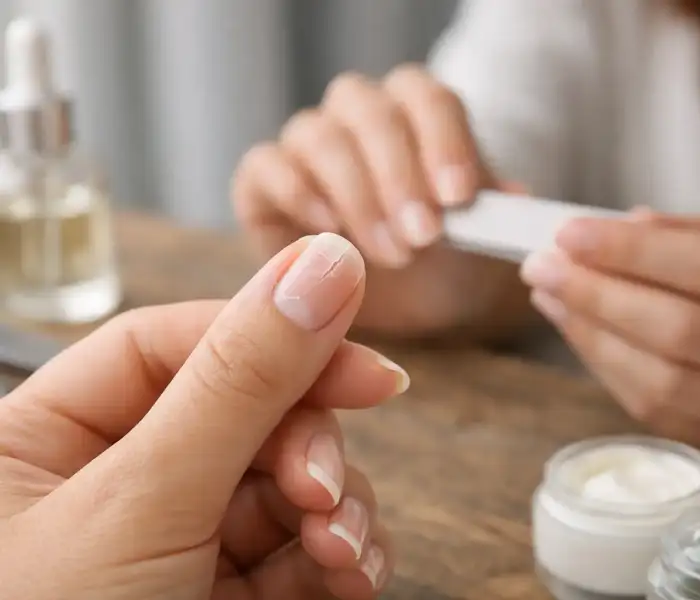
A good salon will also consider hygiene and nail health as part of the decision. If your natural nails are thin or peeling, some services may feel better than others. If your priority is a pristine finish for two or three weeks, durability may take the lead.
Classic manicure
A classic manicure is the most traditional option. It usually includes nail shaping, cuticle care, buffing, lotion, and regular polish. The finish looks clean and refined, and it is a strong choice for clients who enjoy changing colors often.
The biggest advantage is flexibility. Regular polish is easy to remove and ideal if you like to switch shades with the season, the week, or a special event. It also tends to feel the most natural because there is no added structure over the nail.
The trade-off is wear time. Regular polish typically chips sooner than gel or dip, especially if your hands are in water often or you are rough on your nails. For many clients, that is perfectly acceptable. If your goal is a neat appearance for several days rather than multiple weeks, a classic manicure still has real value.
This option also works well for people easing back into salon services or anyone who prefers a lighter, simpler maintenance routine.
Gel manicure
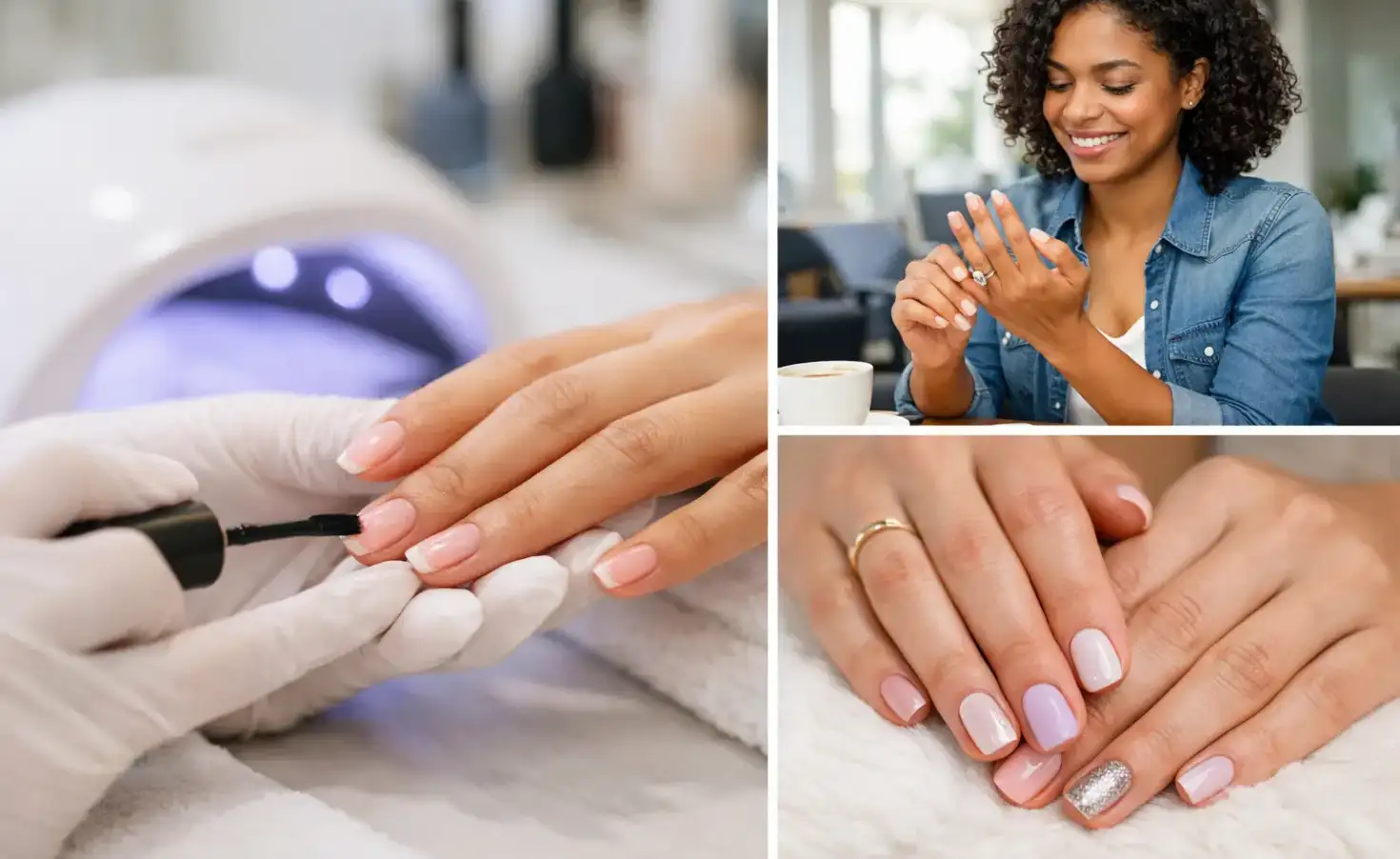
A gel manicure gives you a glossy, polished look with noticeably longer wear than regular polish. The polish is cured under a lamp, which helps it set quickly and resist smudging. For busy clients, that alone is a major benefit.
Gel is often the right middle ground between beauty and practicality. It keeps a sleek finish for about two weeks, sometimes longer, depending on your nails and your daily routine. It is especially popular for professionals, travelers, and anyone who wants to leave the salon with dry, finished nails.
The main consideration is removal. Gel should be removed properly to help protect the natural nail. Picking or peeling it off at home can leave nails feeling weak or uneven. That is less about the product itself and more about how it is maintained.
If you want a polished look with low daily effort, gel remains one of the most reliable choices.
Dip powder manicure
Dip powder is known for strength and longevity. In this service, the nail is coated with bonding products and powder to create a durable finish that usually lasts longer than regular polish and often longer than gel.
Clients often choose dip when they want extra reinforcement on their natural nails without moving into the full structure of acrylic. It can be a strong option if your nails tend to bend or if standard polish never seems to last.
Dip also has a reputation for holding color well and standing up to daily wear. That makes it appealing for vacations, busy workweeks, and clients who do not want to think much about maintenance between visits.
Still, stronger wear does not automatically mean it is right for everyone. Dip can feel a bit more substantial on the nail than gel, and proper application and removal matter. In a salon that prioritizes sanitation and careful technique, dip can be an excellent long-wear option.
Acrylic nails
Acrylic is best known for added length, shape, and structure. It is created by combining a liquid and powder to form a durable enhancement over the natural nail or over a nail tip extension.
If you want noticeably longer nails, a dramatic shape, or a more sculpted appearance, acrylic is often the most suitable choice. It also offers strength for clients whose natural nails do not easily support the length they want.
The trade-off is maintenance. Acrylics require fills on a regular schedule as your natural nails grow out. They also involve more commitment than a classic, gel, or dip manicure. For clients who love a consistent, defined nail look, that upkeep is often worth it. For someone who wants a simple beauty routine, it may feel like too much.
Acrylic can look elegant and polished when done well, but it is usually best for clients who already know they want enhancement, length, or a stronger design statement.
Which manicure type lasts the longest?
If long wear is your top priority, dip powder and acrylic usually lead the conversation. Gel also performs very well, especially for clients who keep their natural nails at a practical length and want a glossy finish without bulk.
But longevity is not just about the product. Nail preparation, application technique, aftercare, and your daily habits all affect how long your manicure stays beautiful. Even the strongest service will wear differently on someone who cleans often with bare hands than on someone with a gentler routine.
That is one reason many clients prefer an appointment-led salon experience over a rushed service. Precision matters. Clean tools, careful prep, and consistent technique often make the difference between a manicure that lasts and one that starts lifting or chipping too soon.
A practical guide to manicure types by nail goals
If your goal is a natural look, classic polish or gel usually makes the most sense. Both can appear clean and understated, with gel offering more wear time.
If your goal is durability on natural nails, dip powder is often worth considering. It gives more strength without necessarily adding the look of extended nails.
If your goal is length and shape, acrylic is the clearest choice. It gives the most control over structure and style.
If your goal is the easiest maintenance, classic manicures are simple to change, while gel balances longevity with a relatively natural feel. The best choice depends on whether you want convenience at home or longer wear between appointments.
What to ask before choosing a manicure
A few questions can make your decision much easier. Ask yourself how long you want the manicure to last, whether you prefer a natural or enhanced look, and how often you are comfortable coming back for maintenance.
It also helps to mention if your nails are currently thin, brittle, or peeling. A thoughtful nail technician will use that information to recommend the most suitable service rather than pushing the most expensive one. That kind of guidance is often what separates a salon visit that feels relaxing and reliable from one that feels uncertain.
For many clients in Town and Country and nearby communities, trust matters as much as the manicure itself. Cleanliness, consistency, and a calm environment are not extras. They are part of the service.
The best manicure is the one you will enjoy wearing
The most flattering manicure is not always the longest, strongest, or most elaborate. It is the one that fits comfortably into your life and still looks polished a week later. Some clients feel best with a soft neutral gel manicure. Others love the durability of dip or the structure of acrylic.
If you are unsure where to start, keep it simple. Choose the option that matches your routine now, not the one you think you should get. A well-done manicure should feel like ease, not effort – and when it is chosen thoughtfully, that feeling lasts beyond the appointment.